North Dakota Indoor Seed-Starting: Planning by Spring Frost Dates
North Dakota gardeners often need to start seeds indoors before spring weather is settled, but starting too early can leave seedlings crowded, leggy, or ready to outgrow their pots. A frost date offers a useful planning reference, not a promise. The key is to work backward from a realistic outdoor planting window, then adjust for each crop, your location, and the weather.
Use spring freeze dates as planning references
A spring freeze date helps frame the season, but it does not tell you the exact day to sow seeds indoors or move every plant outside. The dates in the weather record are probabilities tied to particular stations. Conditions in your yard can differ, and the date of the last freeze changes from year to year.
According to NOAA National Centers for Environmental Information, at the Fargo Hector International Airport weather station in North Dakota, the 1991–2020 normal last spring freeze (32°F) at 50% probability is 05/10 (May 10). According to NOAA National Centers for Environmental Information, at the Bismarck weather station in North Dakota, the 1991–2020 normal last spring freeze (32°F) at 50% probability is 05/14 (May 14).
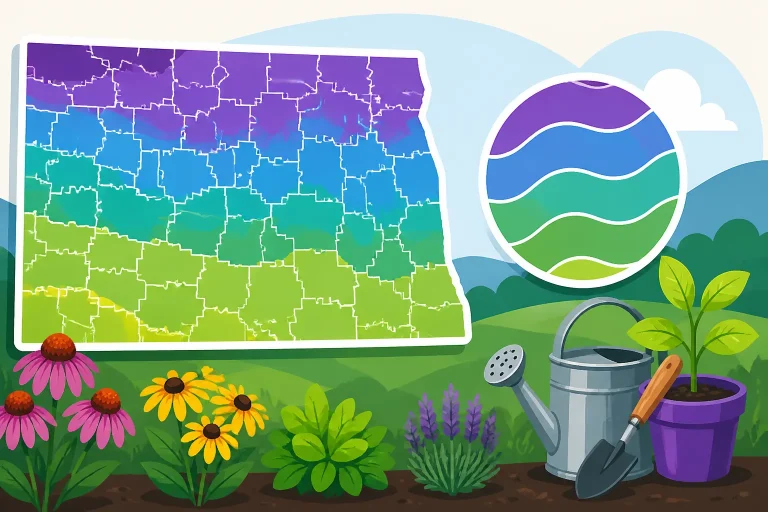
Those are useful local reference points, not a statewide planting schedule. A 50% probability does not mean frost is impossible after the listed date, nor does it guarantee that frost will occur before it. It describes a normal for the station, while an individual spring may run earlier, later, or unevenly across the region. Gardeners outside Fargo or Bismarck should treat those station dates as context rather than as a forecast for their own yard.
A planting calendar is most useful when it combines several kinds of information:
- A local spring freeze reference helps estimate the risk of frost.
- The seed packet explains when and how to sow the crop and how long it generally takes to reach transplant size.
- Current weather and soil conditions help determine whether outdoor planting is sensible.
- The condition of the seedlings shows whether they are ready to move.
For more detail on how regional timing differs, see North Dakota Spring Frost Timing and Regional Freeze Normals and How Spring Planting Dates Shift Across North Dakota Regions. If you are deciding whether to start seeds indoors or sow outdoors, Direct Sowing vs. Starting Transplants for North Dakota Gardens can help match the method to the crop.
The main planning mistake is to treat a calendar date as a command. Instead, use the local freeze normal to sketch a possible outdoor window, then count backward according to the seed packet’s guidance. Revisit the plan as the weather and seedlings develop. That flexible approach is more reliable than assuming every crop should be started at the same time.
Work backward from the outdoor planting window
Indoor seed starting is a timing problem: seeds need enough time to develop into sturdy transplants, but not so much time that they become overgrown before outdoor conditions are suitable. The answer depends on the crop, the seed packet’s instructions, the growing conditions indoors, and whether you plan to transplant or sow directly in the garden.
Start by deciding which crops truly benefit from indoor preparation. Some crops are commonly started indoors because transplanting gives them a useful head start. Others are straightforward to sow directly in the garden, so starting them inside may add work without improving the result. A crop’s sensitivity to root disturbance, its growth habit, and the amount of indoor light and space available all matter.
Next, identify a likely outdoor planting window for each crop. The spring freeze normal can be a reference for crops that need protection from frost, but it should not be treated as the sole factor. Some plants tolerate cool conditions better than others. Tender plants may need a warmer, more settled period, even after the typical last spring freeze. Soil can also remain cold or wet while daytime air feels mild.
Then use the seed packet to plan backward. Look for guidance about indoor sowing, transplanting, germination conditions, and the expected size or stage for moving seedlings outside. Packet instructions are a starting point rather than a guarantee: a cool room, weak light, or slow germination can shift the schedule. A warm, bright growing space may move development along more quickly.
A practical planning sequence looks like this:
- Choose a realistic outdoor window for the crop, allowing for local conditions rather than relying on a single date.
- Read the seed packet for indoor sowing and transplant guidance.
- Estimate when to sow so the seedlings can reach a transplantable stage without spending too long indoors.
- Check the seedlings as they grow and adjust the plan if they are developing faster or more slowly than expected.
- Keep a backup option, such as delaying sowing or buying a transplant, if indoor conditions are not suitable.
This approach is more dependable than applying one universal indoor-starting date to every crop. If a packet offers a range rather than a single sowing recommendation, consider how quickly the crop grows in your home and how much room you have. A gardener with limited window space may prefer to start fewer plants closer to the likely planting period rather than maintain a large batch of seedlings for an extended time.
A calendar can still help, as long as it stays flexible. Make a separate note for each crop with its intended outdoor window, packet guidance, and any conditions that may affect the decision. You might mark a date to review the plan rather than a fixed date to transplant. That small change makes it easier to respond to a cold forecast or delayed soil warming.
For crop-specific decisions, Which Vegetables to Start Indoors for a Short Northern Season and Which Crops to Direct Sow vs Start Indoors for Prairie Beds offer useful ways to compare methods. If you are weighing indoor-grown tomatoes against nursery plants, see Tomatoes and Peppers: Indoor Seeds or Nursery Transplants?. Botanical Interests seed packets can be useful when you want crop-specific sowing directions and growth information; compare the packet’s recommendations with your available indoor light and expected outdoor conditions.
Match the starting method to the crop
Not every seed benefits from being started indoors. The choice is not simply about getting an earlier harvest. Some seedlings handle transplanting well, while others may struggle when their roots are disturbed or when they are moved from a protected space into outdoor conditions. A sensible plan gives indoor space to crops that are likely to benefit from it.
Crops that can benefit from indoor starts
Indoor starting can be helpful when a crop needs a longer period of growth than the local outdoor season comfortably provides, or when young plants benefit from protection while the garden is not ready. It also lets a gardener control the early growing environment, which can be useful when outdoor soil is still cold or unsettled.
But an indoor start only helps if the seedlings receive enough light, have room to grow, and are moved outdoors at an appropriate stage. A seedling that is tall, weak, or root-bound is not necessarily ahead of one that was sown later. The goal is a healthy transplant that can adapt, not the largest plant possible.
Crops that are often simpler to sow outdoors
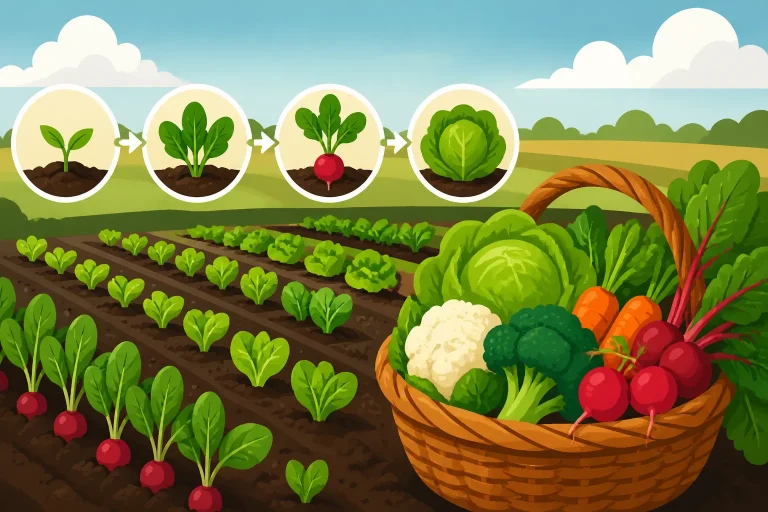
Some crops are better suited to direct sowing because they grow quickly, do not need an indoor head start, or are less suited to being transplanted. Sow these when outdoor soil and weather are appropriate for the crop, following the packet directions. A freeze normal alone does not indicate whether the soil is warm enough, dry enough, or workable.
Direct sowing can also make the garden schedule easier to manage. It avoids the need to provide indoor light and space, and it removes the transition from indoor conditions to the garden for crops that do not require transplanting. A mixed approach—starting some crops inside and sowing others directly—often makes more sense than trying to start everything indoors.
Use seed packets as crop-specific instructions
Seed packets can differ in how they describe indoor sowing, transplanting, and direct seeding. Read the instructions for the specific crop and follow the depth, spacing, and care guidance provided. If you are using seed from a different source, do not assume that instructions for another crop or variety apply.
If the packet recommends indoor starting but your home lacks a bright, suitable place for seedlings, consider another strategy. You could start fewer plants, choose a crop that is easier to direct sow, or use healthy nursery transplants when the outdoor window arrives. The best method is the one you can carry through consistently.
For help matching crops to a short northern season, see Selecting Short-Season Crop Varieties for North Dakota. The broader planting calendar in North Dakota Freeze Dates and Seasonal Planting Schedule can also help connect indoor planning with outdoor sowing and transplant decisions.
Set up seedlings for sturdy growth
Good timing cannot compensate for poor growing conditions. Seedlings that receive too little light, inconsistent moisture, or inadequate room may become weak before the weather allows them outdoors. Before sowing, make sure you can provide a suitable place for the plants to germinate and grow.
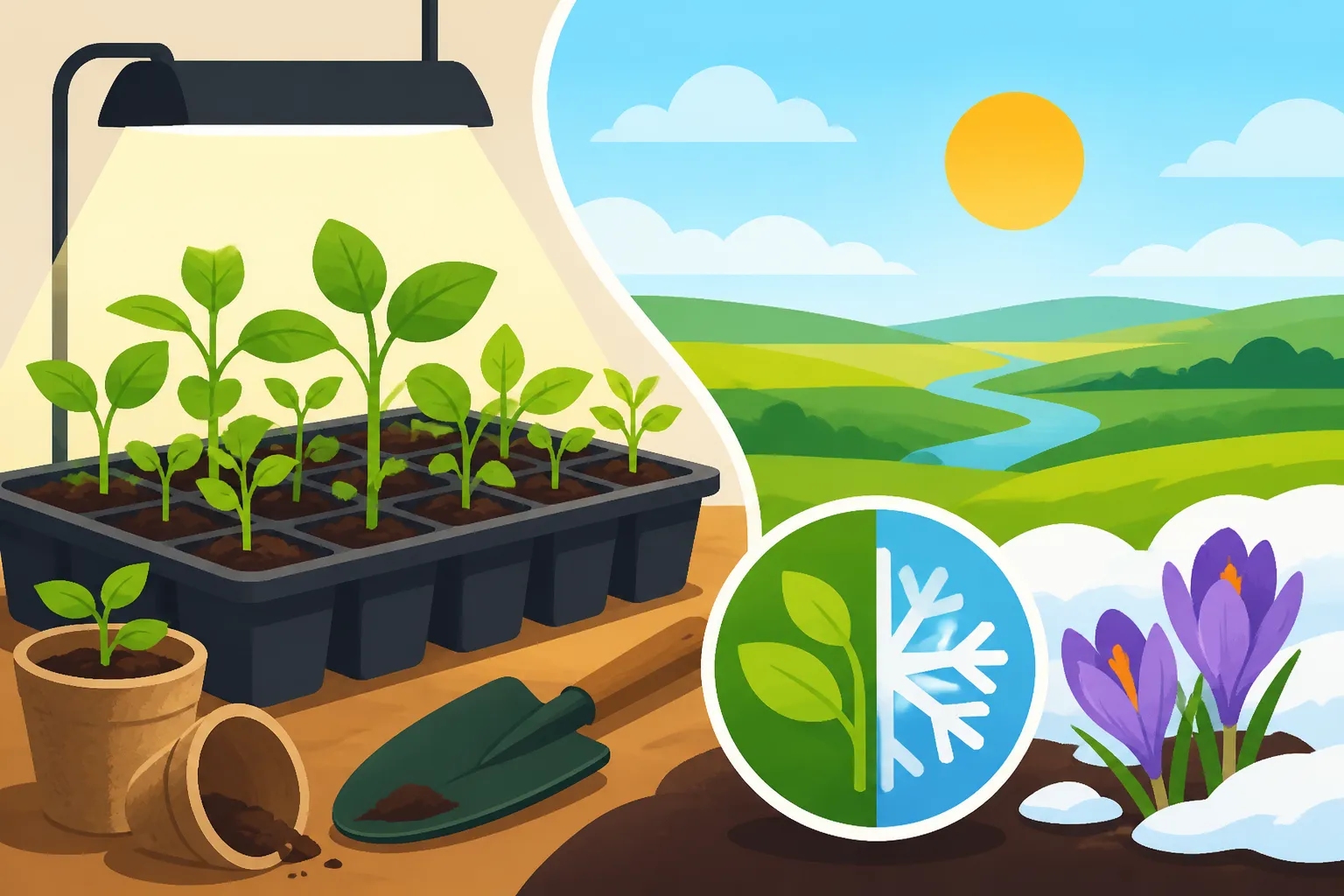
Light is one of the biggest practical constraints. A bright window may work for some seedlings, but the amount of usable light can change with the season, window direction, nearby obstructions, and the weather. Watch plant growth rather than assuming that a spot that looks bright to you is sufficient. Seedlings that stretch toward a window or develop thin stems may be signaling that they need better light.
A grow light can make indoor conditions more consistent, but it still needs to be set up and managed appropriately for the plants. Follow the equipment directions and avoid placing plants so close to a light source that they are damaged. Rotate trays if light reaches them unevenly, and arrange containers so seedlings do not shade one another as they grow.
Use clean containers with drainage so excess water can escape. A suitable seed-starting medium should support germination and allow roots to develop. Garden soil taken directly from a bed may be too heavy or inconsistent for small containers. If you reuse trays or pots, clean them well before sowing. How to Safely Clean Seed Starting Trays Between Seasons covers container hygiene in more detail.
Moisture should be steady without leaving seedlings waterlogged. Small containers can dry faster than garden beds, especially in warm indoor spaces, so check the growing medium regularly. At the same time, repeatedly saturating trays can deprive roots of air and encourage problems. Water based on the condition of the medium and the needs of the seedlings rather than following a rigid schedule.
Once seedlings have emerged, make room for healthy growth. Crowded plants compete for light and airflow, and they can become difficult to handle at transplant time. Thin or separate seedlings as appropriate for the crop and the container. If plants are developing quickly, transplant them into larger containers when needed rather than letting roots become cramped.
Keep brief notes as the seedlings grow. Record which sowing approach worked, whether light was adequate, and how plants responded after moving outdoors. Those observations can improve future timing more than trying to follow an exact date that may not fit your home or location.
Harden off before planting outdoors
A seedling raised indoors has not yet experienced the full combination of outdoor sunlight, wind, temperature shifts, and changing moisture. Moving it straight from a protected room into the garden can shock the plant, even when frost is not expected. Hardening off is the gradual transition that helps seedlings adjust.
Begin when the plants are healthy enough to handle the change and the outdoor conditions are suitable. Introduce them to a protected outdoor spot for a limited period, then return them indoors or to shelter as needed. Gradually increase their exposure to outdoor light and air. Protect them from harsh wind, intense sun, and abrupt cold while they adjust.
The process should respond to the weather, not just the calendar. A mild, calm day is different from a day with strong wind or a sudden drop in temperature. If conditions become severe, pause the transition or move seedlings to a protected place. Hardening off is not a way to make tender plants frost-proof; it prepares them for ordinary outdoor conditions.
Watch for signs of stress. Leaves that wilt, scorch, or look damaged may indicate that exposure increased too quickly or that the plants need water or shelter. Give seedlings time to recover before increasing exposure further. Healthy plants that remain upright and continue growing are better candidates for transplanting than plants already struggling.
When the seedlings are adjusted, choose a planting time that suits both the crop and the forecast. A freeze normal is not a guarantee against a late frost, so keep a way to protect newly planted tender starts if cold weather threatens. Hardening Off Young Starts Before North Dakota Spring Frosts provides more detail on this transition, and Acclimating Indoor Starts to Northern Sunlight and Winds focuses on the outdoor conditions that can challenge young plants.
A few practical habits make hardening off easier:
- Keep trays where you can move them quickly if the weather changes.
- Choose a sheltered location for the early part of the transition.
- Increase exposure gradually instead of leaving indoor-grown seedlings outside for a full day immediately.
- Check the growing medium because containers may dry more quickly outdoors.
- Delay transplanting if plants are still weak or the forecast is unsuitable.
The transition can take more planning than simply choosing a garden date, but it reduces the abrupt change between indoor and outdoor environments. If your schedule is tight, start fewer seedlings rather than sowing a large batch that will be difficult to move and protect.
Make the transplant decision with weather and plant condition
The spring freeze normal provides context, but transplant decisions should also account for forecast conditions, soil, and the crop’s needs. A warm afternoon does not necessarily mean that the garden is ready for tender starts. Cold nights, chilly soil, wind, and wet ground can all slow establishment or damage plants.
Before planting, check the short-term forecast and consider whether a cold spell is approaching. Forecasts can change, so keep vulnerable plants accessible to shelter or prepare suitable protection when a risk is present. Covering plants can reduce exposure in some situations, but it is not a substitute for choosing an appropriate planting window or following the cover product’s instructions.
Soil conditions matter as much as air temperature for many crops. Soil that is cold and saturated may be hard for roots to establish in, while soil that is workable and warming can make transplanting more successful. Avoid working soil when it is excessively wet, since handling it in that condition can damage its structure. For more on the difference between soil warmth and air conditions, see Spring Planting Benchmarks: Soil Warmth Versus Calendar and Soil Warmth Versus Air Warmth for Sowing Tender Veggies.
Assess the plants themselves before transplanting. Healthy seedlings should be sturdy enough to handle, with roots that hold the growing medium together without forming a dense, tangled mass. Plants that are limp, damaged, or severely stretched may need time to recover or may be poor candidates for planting. A transplant does not become ready simply because a calendar date has arrived.
After planting, water the soil as needed to help settle it around the roots, while avoiding conditions that keep the bed saturated. Monitor the plants as they adjust. A short period of slow growth can be part of transplant recovery, but continued wilting, leaf damage, or a forecasted freeze calls for attention. Use protection that fits the crop and follow its directions.
If the weather turns colder after planting, avoid assuming that all seedlings need the same response. Tender starts are more vulnerable than cool-tolerant crops, and a mature plant may withstand conditions that harm a young transplant. Using Spring Freeze Forecasts to Schedule Tender Transplants and Covering Tender Crops Before North Dakota Nighttime Freezes offer further help with forecast-based decisions and protection.
Adjust the plan when spring does not follow the calendar
North Dakota spring conditions can shift from mild to cold, windy, wet, or warm with little warning. Indoor seed starting works best when it remains adaptable. If the garden is delayed, the seedlings should not be left indefinitely in the same small containers. If spring arrives early, do not rush plants outdoors before they are ready or before the crop’s conditions are suitable.
When outdoor planting is delayed, review the seedlings’ needs. If roots are filling the container, potting them into a larger space may help maintain healthy growth. Keep light strong and moisture consistent. Avoid adding extra fertilizer or water simply because plants are being held indoors longer; follow product directions and the seed packet’s care guidance.
If seedlings are ready but weather is not, protect them from becoming stressed while you wait. Good light, air movement, and adequate space help, but the indoor setup may have limits. This is one reason to avoid starting seeds too early. A more conservative sowing plan can be easier to manage than trying to hold oversized transplants through an extended cold spell.
If conditions become suitable sooner than expected, check that plants have been hardened off and that the soil and forecast make sense for the crop. A calendar’s potential planting window does not eliminate the need to assess current conditions. Use a warm spell as an opportunity to review the garden, not as automatic permission to plant every seedling.
Some gardeners use more than one sowing date to spread the workload or reduce the risk of losing an entire batch. That can be useful when the crop tolerates successive sowings and there is enough space to manage them. For garden crops that benefit from staggered sowing, Succession Planting in North Dakota for Steady Harvests explains how to plan beyond a single planting.
Keep notes on what actually happened: when seeds emerged, whether the seedlings became too large, how the weather affected transplanting, and which crops handled direct sowing well. Those observations are specific to your home, equipment, and yard. Over time, they can make your personal planting calendar more useful than relying on a fixed date alone.
A flexible plan is not a vague plan. It gives you clear decision points: whether conditions are suitable, whether the seedlings are ready, whether they have been hardened off, and whether you can respond if the forecast changes. That is the practical value of using spring freeze dates as planning tools rather than promises.
Frequently Asked Questions
Should I start every vegetable indoors?
No. Some vegetables benefit from indoor starts, while others are easier to sow directly outdoors. Check the seed packet and consider whether the crop handles transplanting well, how long it needs to grow, and whether your indoor space can provide enough light.
Does the listed spring freeze date mean frost cannot happen afterward?
No. The dates are normals tied to weather stations and a stated probability. They are useful planning references, not guarantees for a particular yard or a particular spring.
Can I plant seedlings as soon as the spring freeze date passes?
Not automatically. Check the crop’s temperature needs, soil conditions, forecast, and seedling health. Tender plants may need warmer and more settled conditions, and indoor-grown seedlings should be hardened off before planting.
What should I do if my seedlings are ready before the garden is?
Keep them in suitable light and give them enough room to grow. If roots become crowded, potting up may help. Avoid sowing too early in future seasons if holding seedlings becomes difficult.
Sources
- NOAA National Centers for Environmental Information — NOAA NCEI 1991–2020 Climate Normals — Fargo Hector International Airport, North Dakota (checked November 14, 2026)
- NOAA National Centers for Environmental Information — NOAA NCEI 1991–2020 Climate Normals — Bismarck, North Dakota (checked November 14, 2026)
Disclaimer
This article is for general informational purposes only and does not constitute professional advice. Laws, prices and regulations vary by location and change over time. Consult a qualified professional for guidance on your specific situation. North Dakota Gardening Guide is not a government agency and is not affiliated with any university extension, state department of agriculture or other government agency.