North Dakota USDA Hardiness Zones by ZIP Code
A ZIP code can make it easier to find your part of North Dakota on a hardiness map, but it cannot tell you exactly what will thrive in every yard. The useful approach is to treat a zone as a starting point, then account for local exposure, soil, and seasonal weather before choosing plants or setting planting dates.
What a USDA hardiness zone tells you
A USDA Plant Hardiness Zone is a broad guide to how cold a place typically gets in winter. Gardeners use it to compare a plant’s cold tolerance with the winter conditions associated with a location. A plant described as hardy in a particular zone may be more likely to survive winter in areas mapped to that zone, assuming it is otherwise suited to the site and established in good condition.
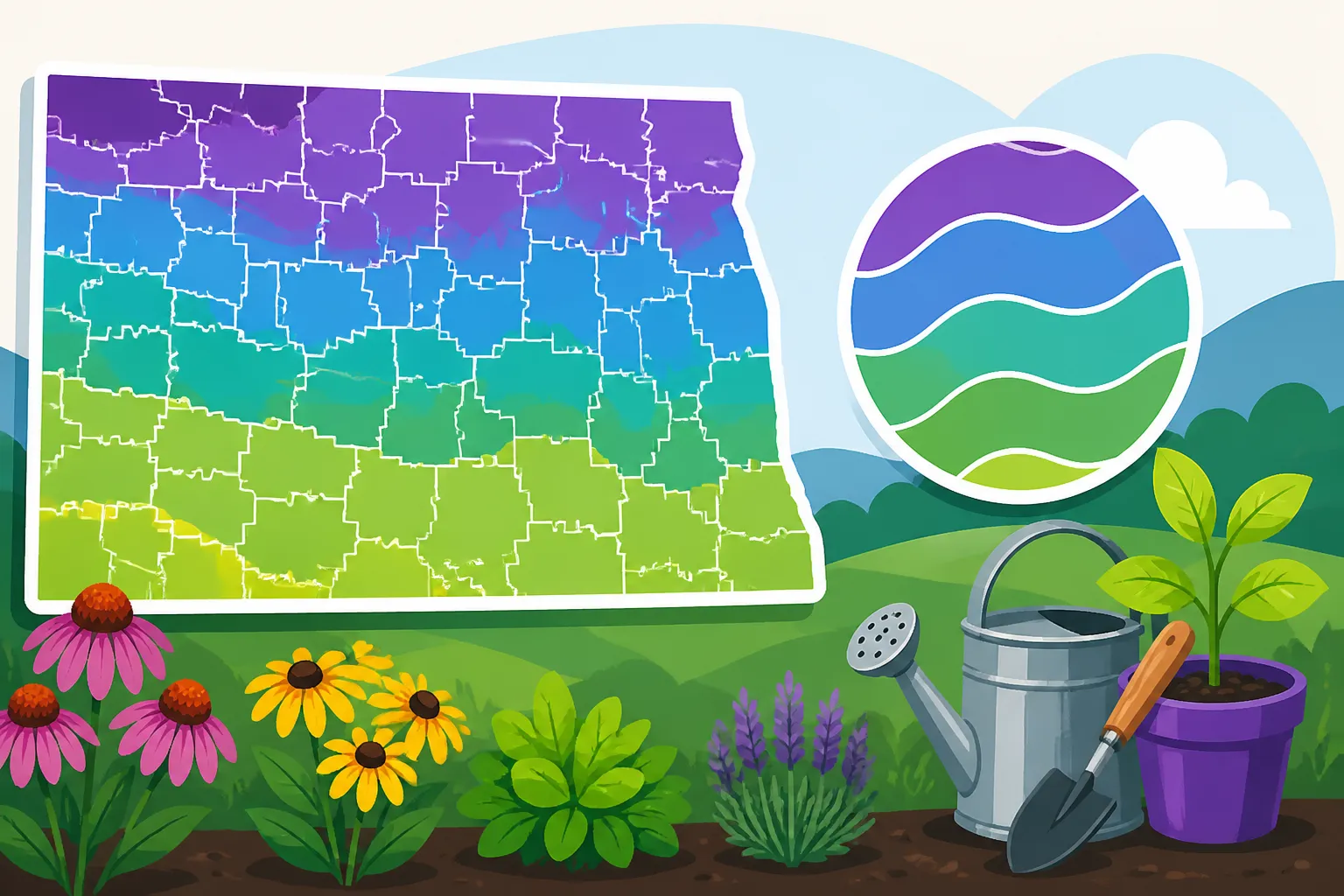
According to North Dakota State University, most of North Dakota falls within USDA 2023 hardiness zones 3b to 4b. That range gives a helpful statewide overview, but it is not a promise that every town, ZIP code, or yard has identical winter conditions.
The zone is mainly a tool for assessing perennial plants: trees, shrubs, and perennial flowers that remain outdoors through winter. It can help you screen options before buying, especially when a plant label or catalog lists a hardiness zone. It is less useful as a complete growing plan for annual vegetables, which are planted and harvested within a season, or as a way to predict when spring planting is safe.
A hardiness zone does not tell you:
- The date of the last spring freeze or first fall freeze.
- How warm the soil is when you want to plant.
- Whether a tender annual has enough time to mature before fall.
- How much wind, sun, snow cover, or soil moisture a specific site receives.
- Whether a plant will tolerate local soil conditions, drought, flooding, or pests.
- Whether a plant will thrive, only whether its stated cold tolerance may be suitable.
That distinction matters in North Dakota. Two gardeners who use the same zone may have very different results if one has a sheltered, well-drained yard and the other gardens on an exposed site with drying winds or wet soil. A zone can narrow the choices, but it cannot replace observing the conditions where the plant will actually grow.
For a broader look at how hardiness zones relate to local geography, see Finding Your Local Hardiness Zone Across North Dakota Counties. If you are comparing the map’s general categories with a practical plant list, Selecting Cold-Hardy Plants for Zone 3 and Zone 4 Gardens can help connect zone information with plant selection.
How to use a ZIP code without treating it as a yard-level answer
A ZIP code is a convenient way to begin looking up a location, but it was created for mail delivery, not to describe a single set of growing conditions. A ZIP code can cover a broad area, and a hardiness map may show variation within or near the area associated with that code. Even a map result that looks precise is still a geographic estimate, not a measurement taken in your garden.
Use a ZIP code to get oriented, then inspect the map around the actual place you plan to plant. If the map shows a boundary nearby, look closely at where the boundary falls in relation to the location. Avoid assuming that the center of a ZIP code represents every property within it. A home near the edge of a mapped area may have a different result from a property elsewhere in the same postal region.
A practical lookup process is:
- Open the USDA Plant Hardiness Zone Map or another official map tool.
- Enter the ZIP code to locate the general area.
- Zoom in enough to see how the map classifies the surrounding area.
- Check whether the location appears close to a zone boundary.
- Compare the map result with the conditions of the actual planting site.
- Use the plant’s hardiness information as an initial filter, then research its other needs.
If a map tool lets you search by place name or inspect the map directly, you can compare those views with the ZIP-code result. The goal is not to find a magic code that predicts the exact temperature in your yard. It is to understand the broader winter conditions that may affect plant survival.
Do not use a ZIP code as a guarantee that a particular plant will overwinter. A plant’s hardiness label is a useful screening detail, but the actual outcome depends on how it is grown and where it is planted. For example, winter survival can be affected by exposure to wind, whether the soil drains well, whether snow covers the planting site, and whether a plant is fully established before severe weather arrives.
If a search result appears to show a different zone from a nearby town or neighboring property, do not assume that one result must be wrong. The map is representing geographic patterns, and the details can change across the landscape. Check the map itself rather than relying only on a search snippet or a retailer’s location label. For county-level context, Central and Southern North Dakota Hardiness Zones and Zone 4a and 4b Boundaries Across Southern North Dakota address regional patterns; neither should be treated as a substitute for checking the location you intend to plant.
Why neighboring yards can behave differently
A map works at a regional scale. A yard works at a much smaller scale, where buildings, trees, slopes, pavement, and soil can shape the conditions a plant experiences. Those local differences are often called microclimates. They do not change the map’s regional classification, but they can influence whether a plant survives and how well it grows.
Shelter and exposure
A sheltered planting spot beside a building or established windbreak may experience less wind than an open area. That can reduce drying stress and protect stems from harsh exposure. A protected location may be more forgiving for a plant that is otherwise suited to the general region.
Shelter is not always an advantage, however. A site close to a wall can warm earlier during a sunny spell, then expose a plant to damaging temperature swings if cold weather returns. Buildings can also create shade or trap heat. Consider what the location is like through the seasons, not just whether it feels protected on a pleasant day.
Open prairie exposure can be especially demanding for plants that are vulnerable to wind or dry winter conditions. If a plant is near the edge of its cold tolerance, the most exposed part of the yard may be a poor choice. A more protected location can improve its chances, though it cannot guarantee survival.
For garden vegetables and transplants, wind can also affect establishment. Protecting Spring Transplants from Cold Prairie Winds covers ways to think about that separate challenge. A plant can be suited to a regional hardiness zone and still struggle if it is battered by wind or planted before it has adjusted to outdoor conditions.
Sun, shade, and reflected warmth
The amount and timing of sunlight affect more than summer growth. Sun can warm a planting area, while shade can keep soil and stems cooler. A sunny south-facing wall may create conditions that differ from an open bed, while shade from a large tree can change the moisture and light available to nearby plants.
Reflected warmth may encourage earlier activity in spring. That can be useful for some plants, but an early start can also leave fresh growth exposed when cold weather returns. The zone does not describe this timing. It describes a broad pattern of winter cold, not the sequence of warm spells and freezes at a particular site.
Before choosing a planting location, notice when it receives direct sun, whether nearby surfaces reflect heat, and how quickly the area dries after rain or watering. These observations help you assess whether a plant’s needs match the site, even when its winter hardiness seems appropriate.
Slope, low spots, and drainage
Cold air can settle in low areas, so a dip in the yard may behave differently from a nearby slope. A poorly drained low spot can also leave roots in wet soil, which may create stress separate from winter cold. A sloped area may drain more readily but could dry out faster or expose plants to stronger winds.
Look at where water collects after precipitation and whether it remains there. A plant with suitable cold tolerance may still decline in soil that stays saturated or dries too quickly. Soil texture, drainage, and moisture deserve their own attention; a zone map does not assess them.
If you are unsure what your soil is like, consider observing how it behaves through wet and dry periods and consulting a local gardening resource for soil-specific guidance. The key is to avoid treating a hardiness label as a complete diagnosis of a planting site.
Snow cover and winter protection
Snow can insulate plants and soil, but it does not cover every part of a yard evenly. Wind may sweep snow away from one bed and pile it against another. A plant in a snow-covered location may experience different protection from one exposed above the snow. A map cannot capture that variation.
The same applies to mulch, wind barriers, and other forms of winter protection. They may help moderate the conditions around a plant, but they do not turn a poorly matched plant into a guaranteed success. Choose plants with reasonable cold tolerance for the region, then use site-appropriate protection as an additional measure rather than the whole plan.
How to choose plants using the map
When you are considering a perennial, start with the hardiness information on its label or in a reliable plant description. Compare it with the map area where you garden. If the plant is not rated for conditions as cold as those associated with your location, treat it as a riskier choice rather than assuming a favorable microclimate will solve the problem.
If a plant is rated for colder conditions than your area, that may make winter survival more likely, but it does not guarantee good performance. The plant may need particular soil, sun, moisture, or growing-season conditions. A cold-hardy plant can still fail if it is poorly suited to a wet spot, has too little light, or is exposed to drought.
A useful plant-selection checklist includes:
- Cold tolerance: Does the plant’s stated hardiness suit the map area?
- Site fit: Does it match the sunlight, drainage, and exposure of the planting spot?
- Moisture needs: Can you provide the moisture conditions it prefers?
- Mature size: Will it have enough room as it grows?
- Establishment: Can you care for it while it develops a strong root system?
- Winter exposure: Is the location windy, snow-swept, shaded, or especially exposed?
- Local guidance: Is the plant recommended for North Dakota conditions by a trusted regional source?
When a plant seems close to the edge of its stated cold tolerance, weigh the cost and effort of trying it against the likelihood of winter loss. If it is a treasured or expensive specimen, a more protected site and extra care may be worthwhile. If you want a dependable, low-maintenance planting, prioritize plants with a comfortable margin of cold tolerance and a good match for the site.
For shrubs, trees, and other long-lived plantings, it is also worth thinking about how the location will change. A small tree may eventually shade a bed; a windbreak may become more effective as it grows; a nearby structure may create a narrow strip of reflected heat. A planting can be well suited to the current conditions and less suited once the surrounding landscape matures.
For regional options, North Dakota Vegetable Gardening: Reliable Backyard Crops focuses on vegetables, while North Dakota Fruit Tree and Bush Planting Guide addresses longer-lived fruit plantings. Use those types of crop-specific resources alongside the zone map. A vegetable calendar and a perennial hardiness rating answer different questions.
Why a hardiness zone is not a planting calendar
A hardiness zone helps you assess winter cold tolerance. It does not tell you when to sow seeds, transplant seedlings, or move a tender plant outdoors. Those decisions depend on spring and fall weather, soil warmth, the crop’s needs, and how much growing time remains before cold weather.
For example, a vegetable may be able to grow in North Dakota but still need a particular planting window to mature successfully. A plant label that suggests winter survival does not say whether a tender crop can withstand a late spring freeze. Similarly, a map cannot tell you whether a warm spell is likely to last or whether the soil is ready for planting.
Use separate tools for separate questions:
| Gardening question | What to check |
|---|---|
| Is a perennial likely to tolerate winter cold here? | The hardiness map and the plant’s cold-tolerance information |
| When should I sow or transplant a crop? | A regional planting calendar, crop guidance, and current conditions |
| Is the soil ready for a crop? | Soil warmth, moisture, and the crop’s germination or transplant needs |
| Is a freeze possible soon? | A local weather forecast and freeze guidance |
| Will a plant suit my yard? | Sun, drainage, wind exposure, moisture, and available space |
Do not shift a spring planting date just because the hardiness map shows a relatively favorable area. A warm-looking zone does not mean tender plants are safe from a spring freeze. Likewise, a cold-looking zone does not mean every crop must wait until the same calendar date; cool-season crops and tender crops have different needs.
For timing perennial and vegetable work, compare the map with resources such as North Dakota Spring Frost Timing and Regional Freeze Normals, North Dakota Indoor Seed-Starting: Planning by Spring Frost Dates, and When to Plant Spring Vegetables Outdoors in North Dakota. These topics address seasonal timing rather than long-term winter hardiness. Frost dates are useful planning information, but they are not guarantees for a particular year or yard.
Soil warmth is another separate consideration. Air temperatures can rise while garden soil remains cool, especially after a long winter. A crop may germinate poorly or grow slowly if planted into conditions it does not tolerate. Spring Planting Benchmarks: Soil Warmth Versus Calendar and Soil Warmth Versus Air Warmth for Sowing Tender Veggies explain why a calendar date alone can be misleading.
For tender seedlings started indoors, plan for the transition outdoors as well as the planting date. Seedlings raised in protected conditions may be vulnerable to wind, bright sun, and temperature changes. Hardening Off Young Starts Before North Dakota Spring Frosts covers that adjustment. Hardiness zones do not tell you when a seedling is ready for outdoor conditions.
Common mistakes when reading ZIP-code zone results
Treating a ZIP code as a precise climate label
A ZIP-code search can feel specific because it returns a result tied to a familiar location. But the code is only a way to navigate the map. It does not describe all the growing conditions across the area, and it cannot account for the different exposures within an individual property.
If the result appears close to a boundary, inspect the map around the actual garden location. If the tool does not show enough detail, treat the result cautiously and use the broader regional context rather than claiming that every property in the ZIP code has the same conditions.
Assuming the zone guarantees survival
The zone is a cold-tolerance guide, not a warranty. A plant may still be injured or lost because of poor drainage, winter drying, disease, pests, damage during establishment, or a sudden weather event. Conversely, a sheltered spot may allow a plant to survive despite conditions that make it less reliable elsewhere.
Make choices based on both the map and the planting site. If the plant’s hardiness is marginal, consider whether a sheltered location is available and whether you are willing to provide extra care. For a low-effort landscape, choosing a plant well suited to the broader conditions is usually a more dependable strategy than relying on a favorable corner of the yard.
Using the zone to predict spring or fall frost
A hardiness zone is not a frost-date tool. It does not tell you when a spring freeze will end or when the first fall freeze will arrive. Those seasonal events matter for annual crops and tender plants, so use frost and planting resources for those decisions.
The distinction is particularly important when planning a vegetable garden. A perennial’s winter survival and a tomato seedling’s safety outdoors are different questions. For the second, use crop-specific advice, local forecasts, and appropriate planting guidance. Using Spring Freeze Forecasts to Schedule Tender Transplants is relevant when you are deciding whether a tender transplant can go outside.
Choosing only by the plant label
A hardiness label can quickly rule out some options, but it cannot tell you whether a plant likes your soil or the amount of sun in your yard. A plant may survive winter and still produce poorly, grow weakly, or need more maintenance than you want to provide.
Read the full plant description. Check its preferred light, soil drainage, moisture, size, and other needs. When information conflicts, give more weight to guidance that is specific to North Dakota or to comparable northern conditions than to a general description written for a much broader region.
Relying on a single online result
Search snippets, retail listings, and map summaries can simplify a complex location into one label. If the result is important to a major planting decision, inspect the official map and confirm what the plant information actually says. Be cautious with older or unspecific sources that do not explain which map version they use.
A useful habit is to record the location, map result, and plant information together when planning a larger planting. That makes it easier to understand why you selected a plant and to adjust your choices if the site proves more exposed, wet, or shaded than expected.
A practical decision process for North Dakota gardeners
The most reliable way to use a ZIP-code result is to combine it with observations from your yard and the needs of the plant. The process does not need to be complicated. It simply separates the questions that a zone map can answer from the questions it cannot.
- Locate the general area. Use the ZIP code as a starting point on the USDA map, then inspect the map near the actual garden or planting site.
- Note nearby map boundaries. If the location is near a boundary, avoid relying on a single search result as a complete description of the area.
- Check the plant’s hardiness. Compare the plant’s stated cold tolerance with the regional map information. Treat a marginal match as a risk, not as a guarantee.
- Assess the exact site. Look at wind, sun, shade, drainage, moisture, slope, and snow cover.
- Read the full growing requirements. Confirm that the plant’s soil and light needs match what you can provide.
- Use seasonal guidance for planting dates. For annual crops and tender plants, consult frost, soil warmth, and crop-specific information rather than using the hardiness zone as a calendar.
- Start with a manageable trial. If you are uncertain about a plant, try it in a suitable location before committing a large area or replacing a reliable planting.
- Observe the result. Note winter injury, spring growth, moisture problems, and exposure. Those observations help refine future choices for your own yard.
This approach is especially useful for plants that are expensive, slow to establish, or difficult to replace. It also helps avoid the opposite mistake: rejecting a plant solely because a ZIP-code lookup gives a broad result that does not describe a sheltered site or a particular garden bed.
For many gardeners, the best plan is a mix of dependable choices and a few experiments. Use the map to make the dependable choices more reliable. Reserve less certain plants for locations where you can monitor them and provide suitable care. That balance lets you use local conditions without treating a map result as more precise than it is.
Frequently Asked Questions
Can a ZIP code tell me the hardiness zone for my exact yard?
No. A ZIP code can help you locate the general area on a map, but it is not a yard-level measurement. Check the map near the planting site and consider local exposure, drainage, and other microclimate conditions.
Does a hardiness zone tell me when to plant vegetables?
No. It helps assess perennial plants’ winter cold tolerance. Vegetable planting dates depend on the crop, frost risk, soil conditions, and seasonal guidance.
If a plant is hardy for my zone, will it definitely survive?
No. Hardiness information is a starting point, not a guarantee. A plant’s health, establishment, drainage, wind exposure, winter protection, and other site conditions can affect survival.
Should I choose a plant rated for colder conditions than my location?
That can provide a useful margin for winter survival, but it does not ensure the plant will thrive. Check its light, soil, moisture, and space needs as well as its hardiness.
Disclaimer
This article is for general informational purposes only and does not constitute professional advice. Laws, prices and regulations vary by location and change over time. Consult a qualified professional for guidance on your specific situation. North Dakota Gardening Guide is not a government agency and is not affiliated with any university extension, state department of agriculture or other government agency.