Succession Planting in North Dakota for Steady Harvests
North Dakota gardeners have a short, changeable growing season, so a single planting of fast-growing vegetables can leave gaps in the harvest. Succession planting spreads sowing and transplanting across the season, helping you pick fresh crops for longer without needing a larger garden. The key is matching each planting to crop maturity, soil conditions and the local frost pattern.
What succession planting means in a North Dakota garden
Succession planting is a way to schedule crops so that harvests arrive in stages rather than all at once. Instead of sowing an entire row of lettuce or radishes on one day, you plant smaller amounts at intervals. You can also follow an early crop with a later one, or sow a different crop in the same bed after the first harvest.
The approach is useful in North Dakota because spring weather can shift quickly, summer heat may arrive before every cool-season crop is ready, and fall freezes limit how long warm-season crops can keep producing. Timing matters more than sticking to a rigid calendar. A useful starting point is the local spring and fall frost pattern, adjusted for your garden’s soil, exposure and regional conditions. North Dakota Spring Frost Timing and Regional Freeze Normals and Average Spring and Fall Freeze Dates Across North Dakota explain why planting windows vary.
There are several ways to stagger a harvest:
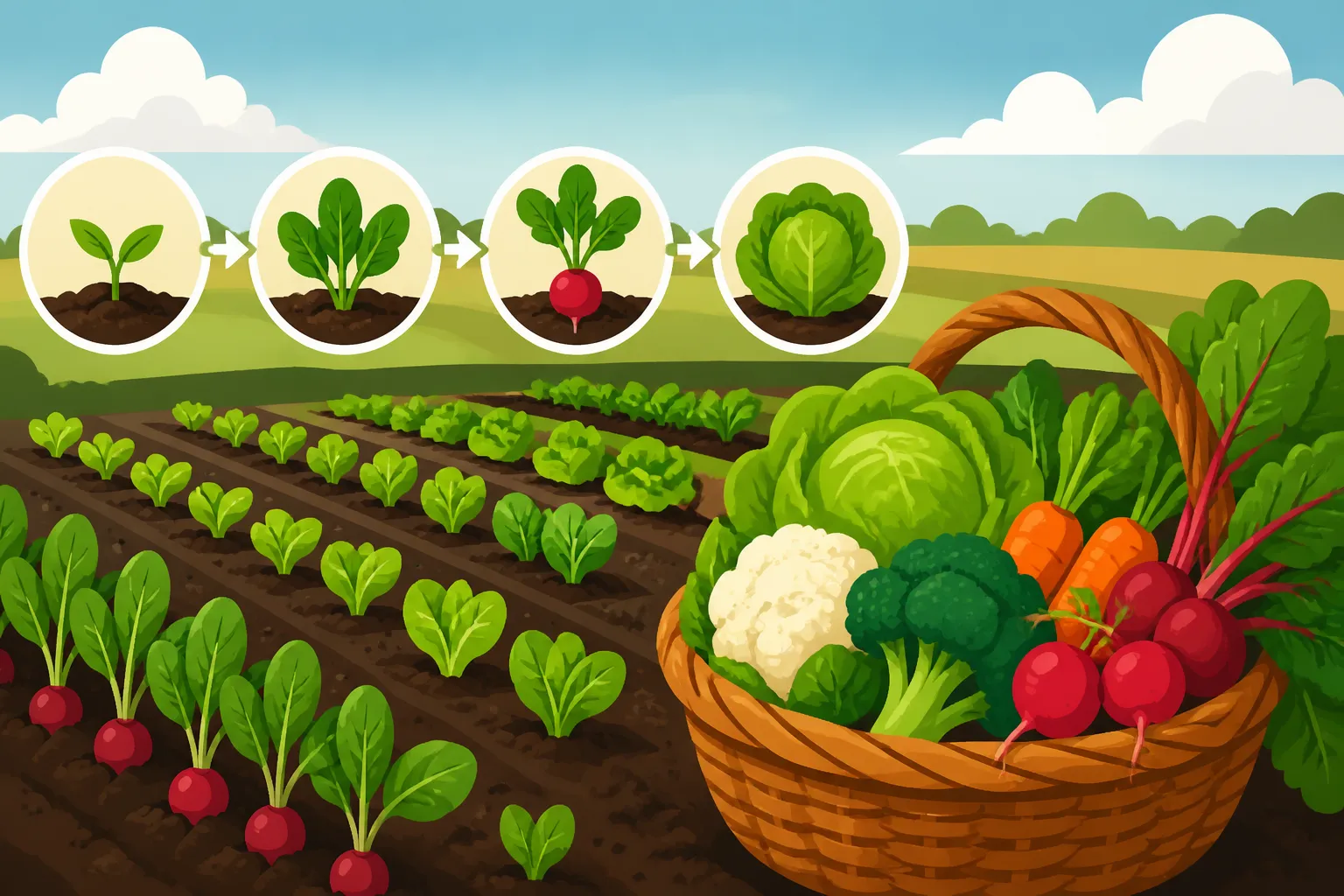
- Repeat sowing: Sow another small patch of a fast-growing crop before the previous patch is finished. Radishes, salad greens and some root crops suit this method.
- Staggered transplants: Plant a few seedlings, then add another small group later. This can spread the harvest of crops such as cabbage or broccoli.
- Relay planting: Sow or transplant the next crop while the current crop is still producing, leaving enough room and light for both. For example, a quick crop can be sown at the edge of a bed before a larger plant finishes.
- Follow-on planting: Clear a crop after harvest and replace it with one suited to the remaining season. Spring spinach may make room for a warm-season crop; an early pea planting might be followed by a fall crop if there is time.
These methods are related but not interchangeable. Repeating a crop is simple when a bed remains open. Relay planting uses space more intensively, but it requires attention to competition for light, water and nutrients. Follow-on planting depends on removing spent plants promptly and knowing whether the next crop has enough time to mature.
A staggered harvest can make a small garden easier to manage, too. If every radish or head of lettuce matures at once, you may have more than you can eat while the crop is at its best. Smaller plantings give you more control over how much is ready at one time. They also offer a practical way to learn how a particular crop responds to your soil and weather before committing a larger part of the garden to it.
Set timing around frost, soil and days to maturity
A seed packet’s days-to-maturity figure is a planning estimate, not a guarantee. It is usually based on particular growing conditions, and the time can shift with cool soil, heat, moisture, light and transplant stress. In a northern garden, count the listed days as a useful comparison between crops, then leave room for weather to slow growth.
For a spring planting, start by asking whether the crop can handle cool conditions. Peas, spinach and radishes can be sown earlier than tender vegetables, but damp or cold soil may still delay germination. Waiting for workable soil matters: seeds sown into saturated ground can struggle, and walking or working on wet beds can compact the soil. For more on choosing between direct seeding and transplants, see Which Crops to Direct Sow vs Start Indoors for Prairie Beds.
For warm-season crops, soil warmth and the risk of a damaging cold night both matter. A warm afternoon does not mean the ground has warmed enough for tender seeds or roots. Tomatoes, peppers, beans and other heat-loving crops are generally better suited to warmer conditions than early greens. Spring Planting Benchmarks: Soil Warmth Versus Calendar and Soil Warmth Versus Air Warmth for Sowing Tender Veggies can help you think through the difference.
Fall planting needs a separate calculation. Begin with the likely time remaining before your area’s first fall freeze, then count backward using the crop’s days to maturity. Add a buffer because shorter days and cooler temperatures can slow growth. If a crop is normally harvested young, consider whether you can pick it at a smaller size rather than waiting for its full listed maturity. Calculating Fall Sowing Dates from Seed Packet Maturity and When to Sow Fall Root Crops Before Ground Freezes offer more detail on working backward from the season’s end.
| Crop or crop group | Useful succession approach | Timing considerations |
|---|---|---|
| Radishes | Sow small patches repeatedly | Use the seed packet’s maturity estimate and avoid sowing more than you can harvest promptly |
| Lettuce and other salad greens | Repeat small sowings or use staggered transplants | Heat can reduce quality; later sowings may benefit from some afternoon shade |
| Spinach | Repeat sowings while conditions suit it | It performs best in cooler conditions and may bolt as heat and long days increase |
| Peas | Sow in stages if the first planting is successful | A later planting can face hotter weather, so keep expectations modest |
| Bush beans | Sow a later patch after the first is established | Check the remaining frost-free window against the packet’s maturity estimate |
| Carrots and other roots | Sow at intervals or make one later sowing for fall | Allow for germination time and soil conditions; do not crowd rows |
| Cabbage-family crops | Stagger seedlings or plan a later fall planting | Match the crop’s maturity time to the season and protect young plants from stress |
| Tomatoes and peppers | Use transplants rather than repeated direct sowing | Their long growth period makes late replacement plantings risky in a short season |
The intervals in the table are strategies, not fixed schedules. A repeat sowing every couple of weeks can work for a fast crop, but it may be too frequent during slow weather or too late when the first frost is approaching. Check the first planting’s progress before deciding when to sow again. If germination was poor or growth is delayed, repeating the same sowing immediately may not solve the underlying problem.
North Dakota’s growing conditions vary by region and year. A planting plan for one town may not fit another, and a warm, sheltered bed may behave differently from an exposed garden. How Spring Planting Dates Shift Across North Dakota Regions and How North Dakota Growing Season Length Changes Year to Year provide context for adjusting plans rather than treating a calendar date as a promise.
Choose crops that suit repeated or follow-on planting
Not every vegetable benefits from being planted several times. The best candidates are crops that mature relatively quickly, are harvested over a short window, or are useful at more than one size. A succession plan works especially well when you have a clear reason for each sowing: replacing a harvest, avoiding a glut, or filling a bed after an early crop.
Fast crops for repeated sowing
Radishes, salad greens and some other quick crops are natural choices for repeated sowing. Small, separate plantings can help keep them coming while conditions remain suitable. If a crop’s quality drops in summer heat, pause rather than continuing the same schedule. You can return to it later if the weather cools and enough time remains. Succession Sowing Spring Radishes in North Dakota Gardens covers one example of planning repeated sowings.
Leafy greens are especially useful in a staggered garden because you can harvest some leaves without removing the whole plant, depending on the crop and how it is growing. That can extend the picking window, though it does not eliminate the effects of heat, dry soil or bolting. Sow a smaller follow-up patch rather than assuming the first patch will provide fresh leaves indefinitely. For options suited to early sowing, see Cold-Tolerant Greens to Direct Seed in Early Prairie Soils.
Peas can be planted in stages, but later sowings face a trade-off: the plants may encounter warmer conditions as they grow. A small trial planting is more sensible than reserving a large bed for a late sowing before you know how the crop responds in your garden. If the first planting already meets your household’s needs, use the space for a crop better suited to the remaining season.
Crops for a second planting
Bush beans and some root crops can be useful follow-on choices when there is enough growing time. The seed packet’s maturity estimate helps you assess whether a later sowing is reasonable, but it does not account perfectly for cool nights or a slow start. Give extra thought to germination and early growth: a crop that spends a long time emerging has less time left to produce a harvest.
Cabbage-family vegetables can also be part of a succession plan. Some gardeners stagger transplants so that heads or other harvests do not mature all together. For a late planting, select crops and planting dates with the expected fall conditions in mind. Young transplants need to establish, and late summer heat or dry soil can slow them down. Cool-Season Cole Crops to Plant Before Summer Warmth Arrives and Timing Successive Sowing in North Dakota for Fall Crops address different parts of that decision.
Warm-season crops are harder to repeat late in the year. A second planting of a fast-growing bean may have a chance if the season allows, while a new tomato or pepper planting is usually a much larger gamble because the crop needs more time. The same caution applies to any crop with a long maturity estimate. Can Long-Season Crops Mature Before Early Autumn Freezes? discusses how to assess that risk.
Use crop transitions to keep beds productive
A follow-on planting can work even when you do not repeat the same crop. Once peas or spinach are finished, clear the bed and decide whether it suits a warm-season vegetable, a fall crop, or a cover of mulch until the next planting window. Remove plants that are no longer productive so they do not occupy space or compete with the next crop.
Before replanting, consider what the first crop left behind. Is the soil dry, compacted or covered in weeds? Does the next crop need more room or stronger light? Has the bed been used repeatedly for the same crop family? A new crop should not be treated as a way to ignore an unhealthy bed. Replenish or amend soil only when there is a reason to do so, and base fertilizer decisions on the garden’s needs rather than adding products automatically. Do North Dakota Vegetables Need Fertilizer or Is Compost Enough? offers a broader look at that question.
Rotation can be practical even in a small garden. If you cannot move a crop far, change what grows in the bed when possible and keep notes about where each crop was planted. It may not be possible to follow an ideal rotation in a compact plot, but avoiding repeated plantings of the same crop family in the same spot can help diversify the garden.
Build a simple season-long succession plan
A useful planting plan does not need to predict the weather months in advance. Make a flexible outline, then revise it as you see how crops germinate and grow. A short list of planned plantings is often easier to follow than a crowded calendar.
Plan backward from the end of the season
Start with the crops you most want to harvest and the amount you can use. Write down each crop’s estimated maturity, whether you plan to direct-sow or transplant it, and whether you want one planting or more. Then use local frost information to judge which plantings belong in spring, summer or fall. Do not treat a normal frost date as a fixed deadline; frost timing varies from year to year.
For fall crops, count backward from the likely frost period and allow time for germination and establishment. Shorter days can make late-season growth slower than spring growth, even when temperatures remain comfortable. If the calculation is close, choose a faster crop, start with a transplant where appropriate, or reduce the size of the planting. A small harvest is better than expecting a full crop from a window that is too short.
Use a plan like this as a working outline:
| Part of the season | Main goal | Example planning choice |
|---|---|---|
| Early spring | Take advantage of crops that tolerate cool conditions | Sow a modest patch of peas, spinach or radishes when soil is workable |
| Late spring | Keep quick crops coming and prepare for warmth | Repeat a fast crop if the first sowing is growing well; plant tender crops only when conditions suit them |
| Summer | Avoid harvest gluts and replace finished crops | Sow a small follow-up patch of beans or greens if heat and time allow |
| Late summer | Establish crops for a fall harvest | Count backward from expected frost and allow extra time for slow growth |
| Fall | Harvest on time and protect what is worth keeping | Pick mature crops promptly and use suitable covers if weather threatens |
This is not a regional date chart. It is a sequence of decisions. The actual timing depends on your local frost pattern, soil, exposure and the crop’s progress.
Record what happened, not just what you planted
A notebook, garden calendar or simple spreadsheet can show whether your plan is working. Record the sowing or transplanting date, where the crop went, when seedlings emerged, the weather problems you noticed and when harvest began. Add a note about whether the planting produced too much, too little or about the right amount.
These notes become more valuable after a few seasons. You may find that radishes mature quickly in one bed but struggle in another, or that a spring lettuce patch produces well until a particular stretch of hot weather. Those observations can guide your next sowing more effectively than repeating the same calendar every year.
A useful record can be brief:
- Crop and planting method
- Date or general planting window
- Bed or container location
- Germination and early growth
- First and final harvest
- Any weather or pest issue
- Whether you would repeat, reduce or skip the planting
If a planting fails, try to identify why before sowing again. Poor emergence may point to dry soil, heavy rain, seed depth or a seedbed that was too cold. A weak harvest may be related to crowding, heat or watering, not simply the time of planting. Adjust one or two factors at a time so you can learn which change helped. Adjusting Seed Packet Timelines for Northern Cold Soils is useful when packet estimates seem out of step with local conditions.
Keep the plan flexible
A forecast can help you decide whether a planting needs protection, but it cannot guarantee how the season will unfold. Before sowing a tender crop or moving a transplant outdoors, check both the forecast and the plant’s ability to tolerate cool conditions. A row cover may reduce exposure to light frost, but it is not a substitute for choosing a suitable planting window or monitoring the weather. See Using Spring Freeze Forecasts to Schedule Tender Transplants and Protecting Spring Transplants from Cold Prairie Winds.
For later plantings, keep in mind that a warm spell does not erase the approaching end of the season. A crop sown late may germinate quickly and still fail to mature before a freeze. When the remaining time is uncertain, prioritize crops with a short maturity estimate and harvest them promptly. Fast-Maturing Greens to Sow for a Northern Autumn Harvest and Extending the Fall Garden Season with Fabric Row Covers offer more focused ideas.
Avoid common succession-planting problems
The most frequent mistake is planting too much at once. A succession plan should spread the harvest, not create a longer series of gluts. Start with small follow-up sowings, especially for crops you do not preserve or share. If the first planting is enough, redirect the space to another crop.
Another common problem is repeating a crop without checking whether conditions still suit it. A spring crop may bolt or turn bitter when heat arrives; a late-summer crop may struggle because the soil is dry and the days are shortening. Repeating the first planting on the same schedule can be less effective than switching to a crop that fits the new conditions.
Watch for these practical issues:
- Crowding: Keep each sowing distinct enough that seedlings have room to develop. Overcrowding can make harvest difficult and increase competition.
- Poor germination: Check moisture, seed depth and soil condition before repeating the sowing. A second attempt in the same conditions may fail for the same reason.
- Late planting: Compare the days-to-maturity estimate with the time likely to remain before frost, and leave a buffer.
- Heat stress: Some greens and other cool-season crops may perform poorly during hot weather. Pause or use a better-suited crop rather than forcing a schedule.
- Dry soil: New seed and seedlings need consistent moisture. Wind and warm weather can dry a seedbed quickly, so check the soil rather than relying only on the appearance of its surface.
- Bed competition: Relay planting saves space only if both crops have enough light and room. A large established plant can shade a new sowing.
- Harvest delays: A mature crop left too long can lose quality or prevent the next planting. Pick what is ready and clear crops that have finished.
- Unclear records: If you do not know when a patch was planted, it is harder to judge whether the crop is slow or simply not ready. A brief note can prevent unnecessary resowing.
Succession planting is not a promise of continuous harvest in every weather pattern. It is a way to make better use of the opportunities that do arrive. If spring stays cold, a planned sowing may need to move later. If heat comes early, cool-season crops may need a break. If frost arrives ahead of expectations, late crops may not finish. A flexible plan reduces wasted seed and helps you choose where to put your effort next.
The simplest plan is often the most dependable: plant a manageable first crop, check its progress, and make the next sowing only when it makes sense. Over time, those small adjustments can produce steadier harvests with less surplus and fewer empty beds.
Frequently Asked Questions
How often should I sow vegetables for succession planting?
There is no single interval for every crop. Fast crops may suit repeat sowings every couple of weeks while conditions are favorable, but the right spacing depends on maturity time, temperature and how much you can use. Check the first planting’s progress before scheduling the next.
Can I succession plant in a small raised bed?
Yes. Use smaller patches, sow along an open edge, or clear a finished crop before planting another. Avoid crowding seedlings, and remember that relay planting works only when both crops have enough light, space and moisture.
Which vegetables are easiest to succession plant?
Radishes and salad greens are often convenient because small sowings can be repeated. Beans, peas and some root crops can also fit a staged plan, but later plantings must have enough time to mature before fall frost.
Should I succession plant the same crop or switch crops?
Either approach can work. Repeat the same crop when the growing conditions still suit it and you want more of that harvest. Switch crops when heat, the remaining season or the bed’s condition makes another choice more practical.
Disclaimer
This article is for general informational purposes only and does not constitute professional advice. Laws, prices and regulations vary by location and change over time. Consult a qualified professional for guidance on your specific situation. North Dakota Gardening Guide is not a government agency and is not affiliated with any university extension, state department of agriculture or other government agency.